
HYELE Institute for Comparative Studies
Founder
ARNOLD HERMANN is the founder and director of the HYELE Institute for Comparative Studies, which has hosted and co-sponsored events all over the world, including meetings of the International Association for Presocratic Studies (IAPS), the International Plato Society (IPS), the Plotinus Colloquium, and the European Society for Ancient Philosophy (ESAP).
Mr. Hermann is a philosopher, investigative researcher, and speculative fiction writer specializing in Ancient Greek philosophy, metaphysics, theories of Self and Soul, the history of Slavery, and quantum reality. He is the author of To Think Like God: Pythagoras and Parmenides. The Origins of Philosophy, The Illustrated To Think Like God, and Plato’s Parmenides: Text, Translation & Introductory Essay, and co-editor of Presocratics and Plato: Festschrift at Delphi in Honor of Charles Kahn. He has given guest lectures and seminars at the University of Cambridge, Trinity College, Dublin, Pomona College, Claremont, and Nevada State College, and presented papers and participated in symposia and colloquia at numerous universities, including the University of Arizona, Tucson, the University of Athens, Brussels Free University, and The National Autonomous University of Mexico.
In addition to his academic work, Arnold Hermann is a fervent explorer of ancient and indigenous cultures. Through decades of travel and focused research expeditions he has amassed an encyclopedic knowledge of the archeological, historical, and philosophical aspects of wisdom traditions and civilizations spanning the globe. He has traveled extensively and studied the sites and stories of sacred and significant locations all over the United States, especially the South West, as well as Mexico, Central America, South America, Eastern Europe, especially Romania, Bulgaria, Serbia, Russia, and Georgia, and the Mediterranean region including Greece, Turkey, Italy, Spain, Gibraltar, and Malta, as well as central Europe, and parts of Africa.
For the last eight years, heeding Albert Camus’ observation that “fiction is the lie through which we tell the truth,” Arnold Hermann has been working on a historical / speculative fiction project that is close to completion. The series is titled The Ouranian Chronicles and currently spans three volumes: The Masks of God (volume 1), Soul Engineer (volume 2), and Brotherhood of Shadows (volume 3).
Purpose
The purpose of the HYELE Institute for Comparative Studies is to support and encourage Philosophical research into Science, Art, Culture, Theology, Law, Business, Politics, Human Behavior, and Education.
The HYELE Institute has hosted colloquia, workshops, and slow-reading seminars on Parmenides and Plato for doctoral students, with participating scholars from the Universities of Cambridge, Crete, and Patras. HYELE’s activities focus primarily on Ancient Greek Philosophy, but the institute has also supported interdisciplinary events, such as the multidisciplinary conference on Plato’s Timaeus, organized in collaboration with the University of Illinois at Urbana-Champaign, whose speakers included Nobel-Laureate physicist Sir Anthony Leggett, theoretical physicist Sean Carroll, Dean of Cooper Union’s School of Architecture Anthony Vidler, and many other renowned scholars.
History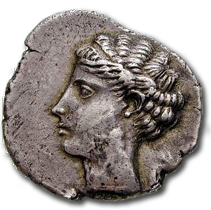 Hyele is an older variation on Elea, an ancient city in Southern Italy established by Greek settlers around 535 BC. Known as Velia in Roman times, today the city belongs to the commune of Ascea, Campania, about 25 miles south of Paestum. Elea's claim to fame is its association with the so-called Eleatic School of philosophy, whose foremost representative is Parmenides of Elea (b. approx. 515 BC).
Parmenides of Elea
One of the most influential thinkers in early philosophy, Parmenides can be both challenging and rewarding. His teachings are preserved in a hexameter poem of uncertain length; the only fragments that have survived are those that are cited in the works of others. Considered by many the first metaphysical work, the main part of the poem, conventionally known as "Aletheia," or "Truth," tackles the difficult subject of "Being" and "Not-Being." Under the heading of "Doxa," or the "Opinion of Mortals," the remainder of the work offers cosmological and biological observations. The question of how these two parts stand in relation to each other has remained controversial. Plato expresses great awe and respect for Parmenides, even seeing in the old Eleatic thinker something of a philosophical father figure. As attested by Albert Einstein and Karl Popper, Parmenides' thoughts, and the difficulties they uncover, continue to fascinate even modern thinkers.
Parmenides' closest pupil is Zeno of Elea (b. approx. 490 BC). He is largely known for his paradoxes and philosophical puzzles addressing such subjects as the impossibility of motion, plurality, and place. Above all, Zeno was a master of the art of refutation by contradiction and reduction to the absurd. Aristotle calls Zeno the inventor of dialectic, and Bertrand Russell praises his work for laying the foundations of modern logic.